
Praying Mantis are fascinating insects – and great food
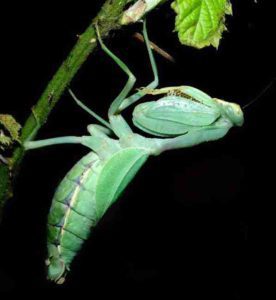
Members of the order Mantodea, the praying mantis, are an interesting group to breed. Not only are they an excellent food source for most chameleons but they are fascinating pets in their own right. Newly hatched nymphs are eagerly eaten by small chameleons, including Brookesias.
There are so many species, from many different habitats and ecosystems, that it’s not possible to give one simple set of guidelines regarding their care. As a rule of thumb, any exotic mantis requires high humidity whereas most local ones do not. Like all wildlife, there are exceptions.
Feeding most mantis is straight forward. They are aggressive predators and will eat most insects including crickets, cockroaches, grasshoppers, flies and moths, even silkworms. This is not always the case. Some foreign species will only eat flying insects; for them eating crickets may be fatal, so check carefully before feeding.
Breeding Mantis
Sexing the adult mantis is generally easy. The female will often be larger and, in some cases, will only have rudimentary wings or none at all, while the smaller male is normally able to fly. Breeding mantis can be a challenge as the female has a deserved reputation for eating males but so long as the female has been well fed, the male may survive. To avoid problems ensure the female is fat, leaving her several weeks before introducing her to the male. Pairing can last a few minutes or several hours.
Once mated a female praying mantis should be fed heavily and somewhere between two and four weeks later she will produce an ootheca. The ootheca may contain between 30 to 200 eggs and will benefit from light spraying. Nymphs will normally hatch from one to four months later and the majority will hatch at the same time. After drying out they will scatter to find their own little perch where they will wait for food.
Caring for Nymphs
Fruit flies make an ideal food source for newly hatched nymphs but some nymphs are very small, so springtails and aphids are needed. Despite their cannibalistic tendencies, most nymphs can be kept together for the first few instars – if ample food is available. A few species can be kept together until they are adults but most cannot so when the number in the cage starts to drop it is time to separate them. The length of time spent as a nymph varies but is normally between two and four months. Adult females can live for over a year and produce more than six oothecae.
To learn more about how to breed mantis for your chameleon, check out this book: Breeding Insects as feeder food